
Big companies build a professional image through consistency, not expensive materials. The marketing that makes my business look more professional starts with a clear visual style and carries it across business documents, social profiles, and customer communications. Using one or two core colors and a simple font family creates a consistent experience at every customer touchpoint.
It’s easy to see why large brands seem established: their details work together. A polished invoice can feel out of place if the business’s social profile is incomplete, just as a strong website can lose credibility when messages contain errors or go unanswered. Small businesses can improve these details without a major redesign or unnecessary overhead.
This article explains how to create consistent branded materials, strengthen professional social profiles, and choose affordable improvements that support customer trust. You’ll also find a practical sequence for building credibility, so you can focus first on the changes customers are most likely to notice.
Key Takeaways
- Use a consistent visual style across invoices, proposals, presentations, and business cards so every interaction reinforces the same professional identity.
- Build a functional website as your online home base, with clear information that helps potential customers understand your services and take the next step.
- Keep social profiles complete and current, use professional communication, and respond to inquiries in a timely way.
- Improve credibility in stages by standardizing client-facing materials, following through on commitments, and collecting testimonials systematically.
- Choose affordable foundations, such as a business email address and a dedicated phone number, before adding overhead that customers may not need.
1. Branded invoices, contracts, presentations, and business cards
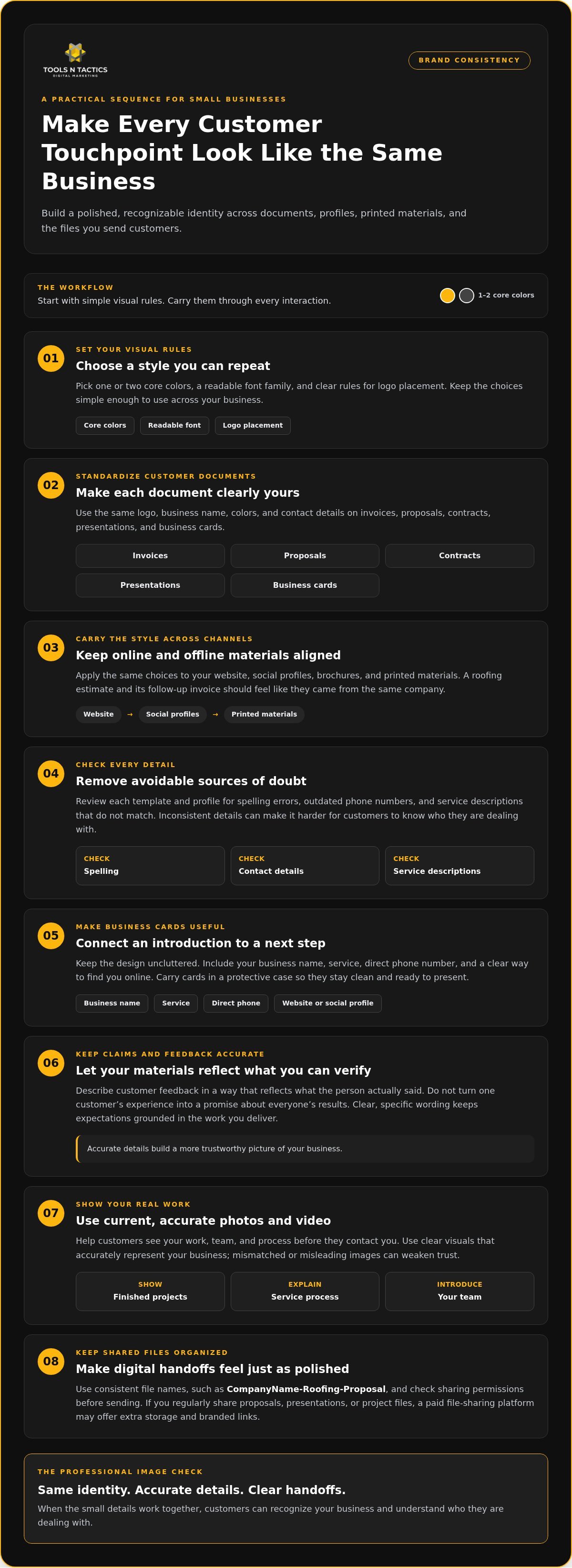
Customers judge a business through small details, including the invoice after a completed job. Use the same logo, business name, colors, and contact details on invoices, proposals, contracts, presentations, and business cards. A roofing contractor, for example, can use one template for estimates and invoices so both documents clearly represent the same company. Consistent materials help customers recognize your business and understand who they’re dealing with.
Build a simple style guide before updating documents. Choose one or two core colors, a readable font family, and rules for logo placement. Apply those choices across your website, social profiles, brochures, and printed materials. Then check each template for spelling errors, outdated phone numbers, and inconsistent service descriptions. A proposal that says one thing while a social profile says another can create avoidable doubt.
Business cards still have a role at job sites, local events, and client meetings. Keep the design uncluttered: show your business name, service, direct phone number, and a clear way to find you online. For example, a card can direct a homeowner to your website or social profile. Carry cards in a protective case so they stay clean and ready to present. Their value comes from connecting a face-to-face introduction with the next step.
For U.S. marketing, use claims you can verify and describe customer feedback in a way that reflects what the person actually said. Avoid turning one customer’s experience into a promise about everyone’s results. Clear, specific wording helps your materials represent your business honestly and keeps expectations grounded in the work you deliver.
Professional photography and video help customers see your work, team, and process before they contact you. A contractor can show a finished project, explain what a service visit involves, or introduce the people answering calls. Use clear, current images that accurately represent your business. Mismatched or misleading visuals can weaken trust instead of building it.
Digital files need the same care as printed documents. If you regularly share proposals, presentations, or project files, a paid file-sharing platform may offer extra storage and branded links. Use consistent file names, such as “CompanyName-Roofing-Proposal,” and check sharing permissions before sending. A branded link and polished document present one reliable identity, while scattered designs and confusing files make a business look disorganized.
2. Why Is a Professional Business Image Important for New Business Owners?
A new business often has one chance to make a clear first impression. A professional website gives potential customers a place to confirm services, service areas, contact details, and next steps. In the United States, 85% of consumers conduct online searches, including visiting company websites, before purchasing. If someone sees your business card or referral, a useful website helps turn that introduction into a real inquiry.
Set up a professional domain and functional website within your first week. Use your business name in the domain when it’s available and easy to remember. Keep the site focused: explain what you do, who you serve, where you work, and how customers can reach you. A local HVAC company, for example, can make its service area and estimate request easy to find from the homepage.
Your website also gives your business a home base that you control. Social media can help people discover your work, but changes to a platform’s algorithm can affect how often followers see your posts. Keep your core information on your website, then use social profiles to direct people there. This creates a reliable route from a post or profile to service details and contact options.
A custom domain supports a more consistent digital presence. Use the same business name across your website, social profiles, business card, and customer documents. A custom email address, such as name@yourbusiness.com, separates work emails from personal messages and reinforces your business identity. Inconsistent names or contact details can make it harder for customers to find the right company.
Common mistakes that make a business look unprofessional online include outdated contact details, broken pages, unfinished social profiles, spelling errors, and unclear service information. For example, a website listing one phone number and a business profile showing another creates friction before a customer even calls. Review key pages and profiles together, correct mismatched details, and remove old offers.
Build each page around a customer task. A visitor looking for a roofer should quickly understand the services offered, areas served, and how to request an estimate. Use clear headings, readable text, and current project examples. Avoid filling the homepage with broad claims that don’t explain what the business does or what a customer should do next.
If your website and customer communications feel disconnected, discuss your online presence and identify which gaps to address first.
3. Professional social media profiles and engagement
A social media profile can be a customer’s first direct impression of your business. On LinkedIn, Facebook, or Instagram, use the same business name, logo, service descriptions, and contact details customers see elsewhere. Complete each profile’s available business fields, including location or service area where relevant. A homeowner comparing contractors should be able to tell what you do and how to reach you without searching through old posts.
Choose profile images that look deliberate and current. A clear professional headshot helps customers recognize the person they may meet at a job site or speak with on the phone. Use a recent team photo or real project image for the cover image, if the platform offers one. Avoid blurry pictures, personal vacation photos, and graphics with tiny text. These choices can distract from the services you want people to remember.
Keep your writing as polished as your visuals. Use proper grammar, spelling, and punctuation in captions, direct messages, and public replies. Replace text speak or slang with clear wording. For example, instead of “DM us, we’ll get u sorted,” write, “Send us a message with your service question, and we’ll follow up.” Specific, courteous language shows customers what to expect.
Make inquiry handling a repeatable task. Assign someone to review social messages, comments, and contact requests, then respond promptly. If a customer asks about a furnace repair, acknowledge the request and explain the next step. Don’t leave a public question unanswered while posting promotional updates. A response process helps prevent qualified inquiries from going cold.
Review each profile regularly. Check that hours, service details, staff names, and contact information remain accurate. Scan past posts for outdated offers, old branding, or content that no longer represents the business. NIST warns that employees may accidentally share private company information on social media, so set clear rules about posting customer details, job-site access, and internal business information.
Use posts to answer real customer questions, not just to fill a calendar. An HVAC company might explain what information helps schedule a service visit, while a roofer could share a project update and describe the work completed. Keep examples accurate and get permission before sharing identifiable customer or property details. When a post prompts a question, send the inquiry to the right person and track whether it leads to a meeting or estimate request.
Check profile performance through the platform’s engagement and inquiry tools. Note which posts prompt useful questions, profile visits, or calls, then create more content around those customer needs. A regular review keeps social media aligned with how the business actually serves people.
4. A staged action plan for building credibility
Build credibility in sequence instead of trying to change every customer touchpoint at once. Start by setting up a dedicated business phone number and professional email address. Keep both details consistent on your website, social profiles, and customer documents. A separate number also helps keep work calls apart from personal calls, making it easier to route inquiries and track responses.
Use that first month to map how a new inquiry moves through your business. Write down who answers, what details they collect, and how the request reaches the person handling the work. For example, a plumbing company might record the caller’s name, service address, issue, and preferred appointment time. A simple intake process prevents important details from getting lost between phone calls and follow-up emails.
In the second month, standardize client-facing materials and meeting protocols. Prepare a consistent estimate, project update, and meeting agenda so each customer receives the same clear information. Decide who leads a meeting, how decisions are recorded, and when the next response is due. Putting these steps in writing reduces confusion when another team member handles the customer relationship.
Use the second month to create standard operating procedures for repeat tasks. A short procedure can explain how staff should respond to a new inquiry, prepare a project update, or handle a complaint. Keep instructions practical and easy to follow. If a team member can complete a task using the written steps, the business is less dependent on one person’s memory.
During the third month, build professional relationships through consistent networking and systematic testimonial collection. Choose relevant industry events, associations, or online communities where potential customers and peers already exchange useful information. After a completed project, ask satisfied customers for honest feedback through a consistent process. Track requests and responses so this work doesn’t depend on remembering to ask occasionally.
At the end of every quarter, review how your business presents itself and where customers experience friction. Compare client feedback with practical signals, such as missed inquiries, repeated questions, and delayed follow-ups. If customers often ask where a service is available, make that information easier to find. If calls go unanswered during busy periods, adjust the routing process or designate someone to monitor incoming requests.
Assign an owner to each improvement and record the next step. A small contractor might have one team member check contact details, another update meeting procedures, and an operations lead review missed inquiries. Clear ownership keeps the plan moving, protects customer trust, and helps your business deliver a consistent experience as work grows.
5. Affordable ways to look established
You don’t need a corporate office to create a credible customer experience. Start with the details customers encounter first: your email address, phone contact, social profiles, and meeting arrangements. A custom email using your business name looks more established than a personal account. A dedicated business number, such as a separate cell phone, also helps distinguish customer calls from personal calls.
Choose design tools based on the work involved. DIY tools work well for simple social graphics, flyers, and repeatable templates when you already know your brand colors and message. Consider professional branding support when your materials feel inconsistent, your service descriptions are unclear, or you’re building a broader marketing system. The right choice depends on whether you need a quick asset or a coordinated brand foundation.
Professional branding and marketing design costs depend on the project’s scope, deliverables, and level of strategy or implementation. For a project-specific figure, request a quote that reflects what needs to be created and how much work is involved.
Improve your social media presence with practical changes you can manage in-house. Use a consistent profile image, write a clear service description, and replace outdated contact details. Then plan posts around real customer questions. A landscaper could explain how to prepare for a site visit, while a roofer could share a clear project update. Useful information builds confidence without relying on constant promotional posts.
For visual content, use well-lit photos from real jobs and keep the images accurate. A phone camera can capture a clear team photo, completed work, or a service vehicle with visible branding. Avoid cluttered backgrounds and images that don’t represent the customer experience. If your business sells products online, focused product photos help customers understand what they’re considering.
Choose flexible alternatives to permanent overhead. Booking a professional meeting space only when needed can create a polished setting without maintaining a dedicated office. A virtual business address and phone answering service can also serve as alternatives to a corporate reception area. Select options that match how customers contact and meet with your business.
Organization matters as much as appearance. Use a project management tool to track inquiries, deadlines, and customer updates. A simple board can show which requests need a response, which estimates are pending, and which jobs are underway. This visible process helps your team follow through and gives customers a more consistent experience.
If your branding and customer touchpoints need a more coordinated plan, talk through your business image and next steps.
The cost depends on the project’s scope, deliverables, and level of strategy or implementation required. Request a quote based on the specific work you need.
Tools N Tactics | Local SEO & Digital Marketing Solutions: Growth Partner Program
Tools N Tactics | Local SEO & Digital Marketing Solutions offers the Growth Partner Program to help service businesses coordinate their growth efforts. It brings visibility, conversion, and authority work together, rather than leaving your website, search presence, and trust-building content to operate separately.
Turn to the program when customers struggle to find your business, your online presence doesn’t clearly guide them toward contacting you, or your marketing efforts feel disconnected. The Visibility Engine supports search visibility, the Conversion Engine focuses on turning interest into action, and the Authority Engine supports credibility. The right priorities depend on where your customer journey needs stronger support.
If you’re ready to discuss a more connected approach, contact Tools N Tactics.
Make your next improvement part of a stronger system
A professional image isn’t a one-time design project. It develops as your business keeps its promises across every customer interaction. Choose your next improvement by looking for friction: where do prospects hesitate, ask the same question repeatedly, or fail to take the next step? That’s where a focused change can support trust and smoother operations.
Marketing that makes your business look more professional works best when visibility, customer confidence, and conversion support one another. Tools N Tactics | Local SEO & Digital Marketing Solutions brings these priorities together through its Growth Partner Program, including the Visibility Engine and Conversion Engine. This approach helps service businesses align how customers find them with what happens after they show interest.
If disconnected marketing efforts are making it harder to present a consistent business, talk with Tools N Tactics about your growth priorities. Take the next step with a clear plan, and keep building an image that reflects the quality of your work.
Frequently Asked Questions
How Do Big Companies Build a Professional Image?
Big companies build professional images by aligning what customers see with how the business actually works. They set clear standards for service descriptions, customer handoffs, and public responses, then check that each channel follows them. For a small business, the useful lesson is to make every promise traceable to a real process. The most effective marketing that makes my business look more professional supports that alignment, rather than relying on polished graphics alone.
What Affordable Things Can New Businesses Do to Look Established?
New businesses can look established by making key customer details easy to find and keeping them accurate. Set up a complete Google Business Profile, add current service information, and use a professional voicemail greeting that explains how callers can leave a request. For a local contractor serving Plano, Dallas, or Melissa, clear service-area details help nearby customers decide whether to get in touch.
Why Is a Professional Business Image Important for New Business Owners?
A professional image helps new owners reduce uncertainty for people who haven’t worked with them before. A homeowner comparing unfamiliar service companies may look for clear answers about the work, communication, and what happens after requesting an estimate. Presenting those details consistently gives prospects a basis for deciding whether the business fits their needs. It also helps the owner set expectations the team can meet.
What Marketing Materials Make a Small Business Look More Professional?
Useful materials include a clear estimate, service overview, project completion report, and customer follow-up messages. For example, an electrician can give customers a completion report that records the work performed and recommended next steps. A short onboarding checklist can also help a professional services firm gather the right information before a project begins. These materials show organization through the customer experience, not design alone.
What Should a Professional Business Website Include?
A professional website should help visitors decide whether to contact you. Include a clear explanation of your services, the customers you serve, relevant service-area information, and a direct next step. A remodeling company could add project examples that explain the scope of work, not just finished-room photos. Make contact options easy to use on a phone, since customers may be checking details between errands or while comparing local providers.
How Do I Create Consistent Branding Across My Website, Ads, Email, and Print Materials?
Create a shared brand reference document with approved business descriptions, logo files, contact details, and preferred wording. Give it to anyone creating a website update, email, advertisement, or printed piece. Before publishing, compare each item with the reference and check that offers and service claims match. For a North Texas business serving Celina, Frisco, and Sherman, keep location wording clear and consistent across channels.
How can I evaluate whether professional marketing is generating a return on investment?
Review client feedback and results each quarter, then adjust your priorities based on what you learn.